
Cut & Impact Resistant Gloves 13G Latex Crinkle ASF-RL3755
13G ANSI A5 cut and impact resistant gloves with TPR back-of-hand protection, aramid finger seams and a three-quarter wave-crinkle latex coating.
View product →
AMSAFE PRODUCT DIRECTORY
Browse 50 products classified from their technical sheets by coating, protection and application.
PRODUCT CATALOG
1 product found
13G ANSI A5 cut and impact resistant gloves with TPR back-of-hand protection, aramid finger seams and a three-quarter wave-crinkle latex coating.
View product →OUR PROCESS
From product development and automated dipping to complete in-house manufacturing and quality control, every stage is connected to deliver consistent safety gloves.
 01
01PRODUCTION
Electrical control components imported from Japan and Germany form the core of the production line, ensuring stable and orderly glove dipping and drying.
 02
02DEVELOPMENT
Engineers with 20 years of experience research and design 5–10 new work glove styles each year, helping customers gain a market advantage quickly while ensuring quality at every step.
 03
03MANUFACTURING
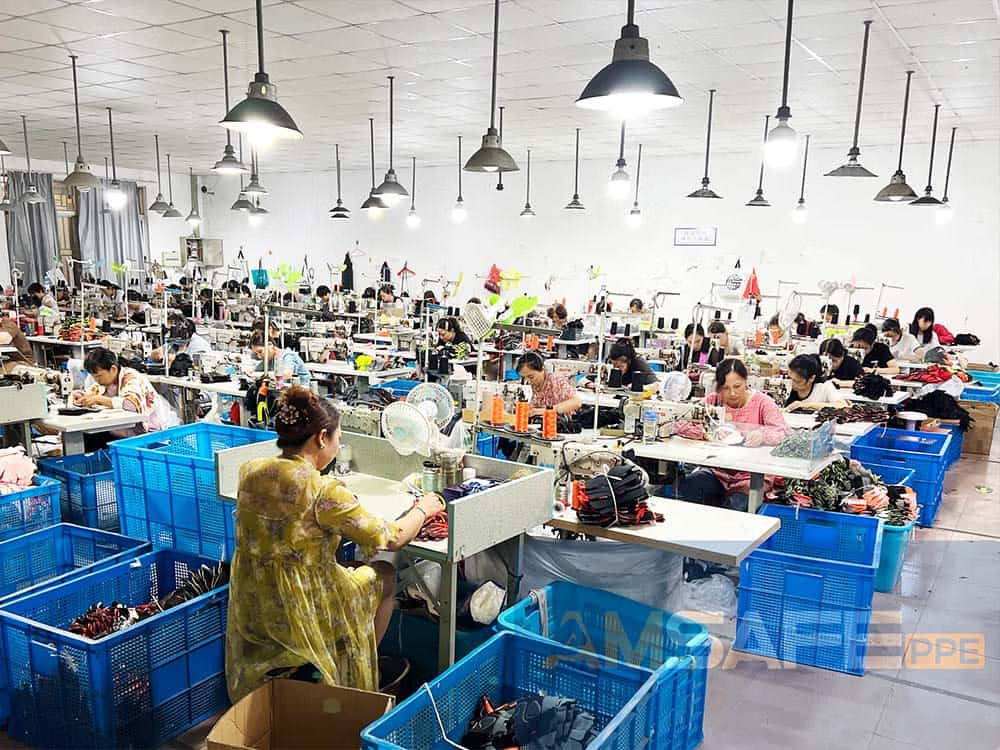
AMSAFE manages thread wrapping lines, knitting workshops, dipping lines and packing workshops in-house to satisfy a wide range of order requirements.
 04
04QUALITY ASSURANCE
AMSAFE combines its own QC system with third-party quality control to ensure every order meets requirements. Automatic detection helps prevent customer complaints and claims.
BUYER'S GUIDE
Clear guidance on the coatings, materials, protection ratings and working conditions represented in our current product range.
Regular nitrile gloves have a smooth surface, while foam nitrile gloves have a textured, foamy coating. Foam nitrile offers better grip and breathability than standard nitrile.
Yes. Their specialised materials and coatings provide excellent wet-grip performance, surpassing other brands and helping maintain a secure grip in industrial and commercial applications.
Heavy-duty gloves are intended for demanding work involving heavy machinery, construction, metalworking and other industrial applications. Their primary purpose is to provide comprehensive protection against multiple hazards.
ANSI cut ratings run from A1 to A9, with higher numbers requiring more force to cut through the glove material. A3 covers 1,000–1,499 grams, A4 covers 1,500–2,199 grams, A5 covers 2,200–2,999 grams and A6 covers 3,000–3,999 grams. These levels suit progressively greater cut hazards.
Yes. Gloves made with materials such as Kevlar aramid can provide protection against both heat and cuts. The required heat and cut ratings should be selected for the specific temperature and hazard.
Cut-resistant gloves are personal protective equipment designed to help prevent slashing and cutting injuries. They protect hands during work involving sharp objects such as glass, metal and knives.
Cut-resistant gloves can use steel core, stainless-steel mesh, fibre-metal blends, Kevlar aramid, Spectra, Dyneema or other high-performance fibres. Each material provides a different balance of cut protection, puncture resistance, durability, flexibility and heat performance.
Cut-resistant gloves are engineered to withstand slicing motions. Puncture-resistant gloves are designed to prevent sharp points from penetrating the glove material. Each addresses a different type of hazard.
Cut-resistant gloves are usually marked with a protection level based on ANSI or EN standards. The rating indicates how well the glove withstands cutting forces; refer to the manufacturer's specification for the exact level.
Yes. AMSAFE offers glove options designed to resist chemicals and oils. They protect against hazardous materials and environmental exposure in industries such as automotive, manufacturing and petrochemicals.